

Introduction
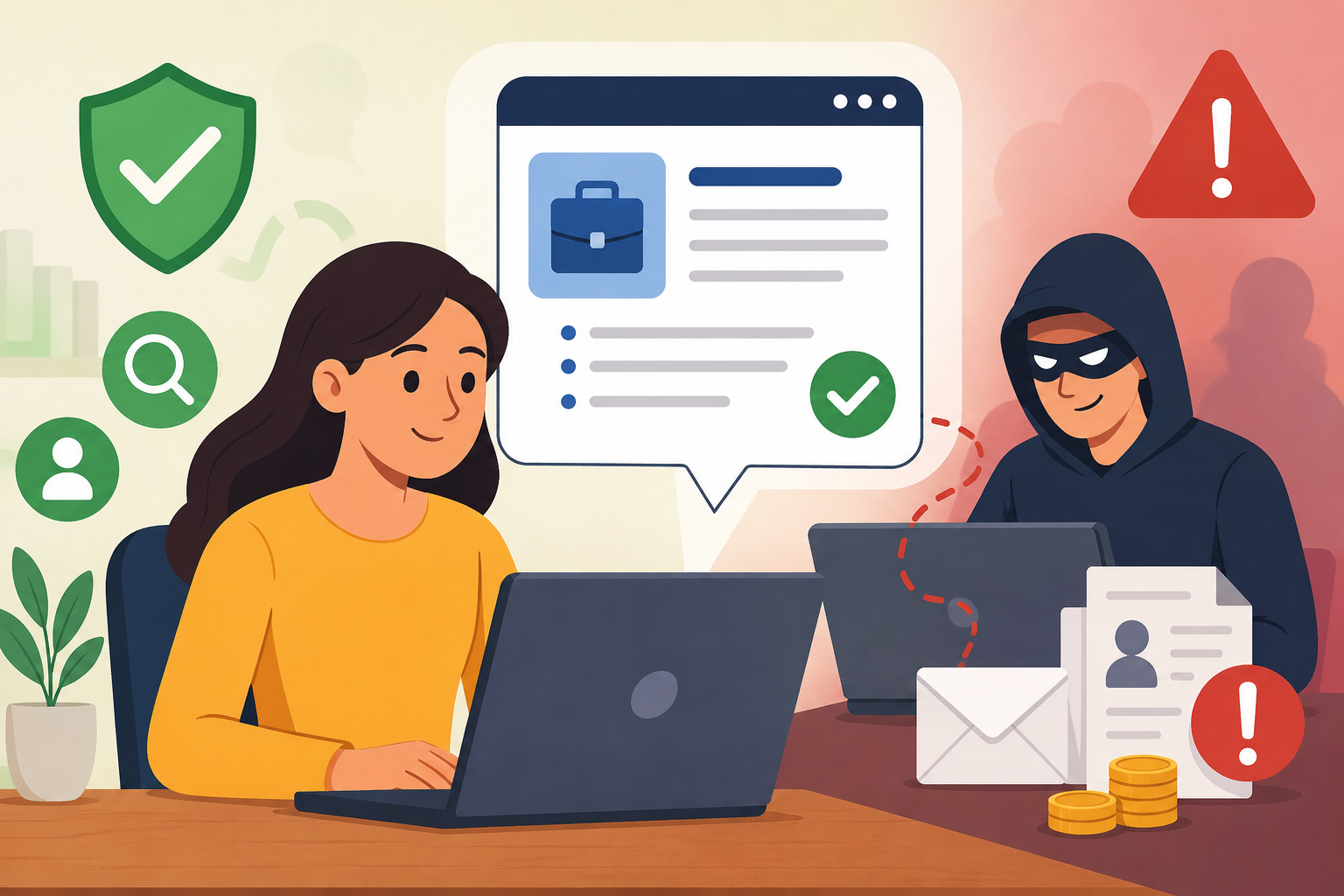
The internet has made job searching easier than ever. With just a few clicks, you can apply for hundreds of jobs from the comfort of your home. But along with genuine opportunities, online job scams have also become more common.
Many job seekers, especially freshers, lose their money, personal information, or valuable time by trusting fake recruiters and fraudulent job offers. The good news is that most of these scams can be avoided if you know what warning signs to look for.
In this blog, we'll explain how to identify genuine job opportunities, recognize common job scams, and protect yourself while searching for your next career opportunity.
Why Online Job Scams Are Increasing
As more companies hire online and more candidates search for jobs digitally, scammers have found new ways to target job seekers. They often create fake company profiles, copy real job descriptions, or pretend to be recruiters from well-known organizations.
Their goal is simple:
* Collect money from applicants.
* Steal personal information.
* Misuse identity documents.
* Trick candidates into fake employment offers.
Recognizing these tactics is crucial for ensuring your safety.
10 Tips to Find Genuine Jobs Online
1. Apply Through Trusted Job Portals
Choose reliable job portals and verified recruitment agencies that have a positive reputation.
Before applying:
* Check if the company profile is complete.
* Read company information carefully.
* Look for official contact details.
* Verify whether the employer has an online presence.
Applying through trusted platforms significantly reduces the chances of fraud.
2. Research the Company Before Applying
Never apply blindly.
Spend a few minutes researching the company by checking the following:
* Official website
* LinkedIn page
* Google reviews
* Company registration details (if available)
* Social media profiles
A genuine company usually has a professional online presence.
If you cannot find any information about the employer, proceed carefully.
3. Never Pay Money for a Job
This is one of the biggest warning signs.
A genuine employer will never ask you to pay for the following:
* Registration fees
* Interview charges
* Training fees before joining
* Security deposits
* Processing charges for job confirmation
If someone says,
"Pay ₹2,000 today, and your job is confirmed."
It is almost certainly a scam.
Remember:
A job offer should earn you money—not cost you money.
4. Be Careful with WhatsApp and Telegram Job Offers
Many scammers contact candidates through messaging apps.
While some recruiters do communicate through WhatsApp, be cautious if:
* They immediately promise a high salary.
* They avoid official email communication.
* They ask for money.
* They pressure you to respond quickly.
* They refuse to schedule a proper interview.
Always ask for an official email from the company's domain before sharing important documents.
5. Check the Email Address
Professional companies usually send emails from their official domain.
Example of a genuine email:
hr@companyname.com
Be cautious of emails like the following:
* company.hr@gmail.com
* hiringjob2026@yahoo.com
* recruitment123@hotmail.com
Free email addresses are not always fake, but they deserve extra verification.
6. Watch for Unrealistic Salary Offers
If a job promises:
* ₹60,000 per month for freshers
* No interview
* No qualifications required
* Immediate joining
Be careful.
Every good opportunity still requires a proper hiring process.
If something sounds too good to be true, it usually is.
7. Read the Job Description Carefully
A genuine job posting usually includes:
* Job title
* Responsibilities
* Required qualifications
* Experience
* Salary (optional)
* Location
* Company details
Fake advertisements often contain:
* Poor grammar
* Missing information
* Very short descriptions
* Unrealistic promises
Taking a minute to read carefully can save you from fraud.
8. Never Share Sensitive Information Too Early
During the initial hiring stage, avoid sharing:
* Bank account details
* ATM or debit card information
* OTPs
* UPI PIN
* Passwords
* Credit card information
Even if someone claims to be from HR, no genuine recruiter will ask for these details before you join.
9. Attend Proper Interviews
Most genuine companies conduct interviews through the following:
* Video calls
* Phone screening
* In-person meetings
* Official meeting platforms
If someone offers you a job without asking a single question about your skills or experience, that's a warning sign.
Employers hire people based on qualifications—not random selection.
10. Trust Your Instincts
Sometimes, small things don't feel right.
Maybe the recruiter is rushing you.
Maybe the company information doesn't match.
The communication may feel unprofessional.
Don't ignore these signs.
Take your time, verify everything, and ask questions before making any decision.
Common Job Scam Tricks
Here are some of the most common scams job seekers encounter:
Fake Offer Letter
You receive an offer letter without attending any interview.
Registration Fee Scam
You're asked to pay a registration or processing fee before joining.
Fake Interview Calls
Scammers pretend to represent well-known companies and schedule fake interviews.
Work-From-Home Fraud
You are promised easy online work with high earnings but asked to pay for training or software.
Identity Theft
Scammers collect Aadhaar, PAN, passport, or other documents to misuse your identity.
What Should You Do If You Suspect a Job Scam?
If you think you've encountered a fake job:
* Stop all communication immediately.
* Do not transfer money.
* Report the fake job listing to the job portal.
* Block the scammer.
* Inform others to prevent further fraud.
* If you've lost money or shared sensitive information, report the incident to the appropriate cybercrime authorities.
Acting quickly can help minimize the damage.
How JobKosha Helps Job Seekers
At JobKosha, we understand that finding the right job should be safe, simple, and transparent.
That's why we encourage employers to provide complete job information and help connect candidates with genuine career opportunities.
Whether you're a fresher looking for your first job or an experienced professional planning your next move, always apply carefully, verify every opportunity, and stay alert.
Your career deserves the right start.
FinalThoughts
Online job searching has opened countless career opportunities, but it also requires awareness and caution.
A little research can protect you from fraud, save your valuable time, and help you focus on genuine opportunities.
Remember these simple rules:
* Never pay for a job.
* Research every company.
* Verify recruiter details.
* Read every job posting carefully.
* Trust only genuine hiring processes.
Stay informed, stay confident, and keep moving toward the career you deserve.
Frequently Asked Questions (FAQs)
1. How can I verify if a job is genuine?
Check the company's official website, LinkedIn profile, reviews, and official contact details. Genuine employers usually have a professional online presence and a structured hiring process.
2. Do genuine companies charge registration or interview fees?
No. Reputable employers and legitimate recruiters do not ask candidates to pay money to secure a job.
3. What should I do if a recruiter asks for money?
Stop communicating with them immediately. Do not make any payment, and report the job posting or recruiter to the platform where you found the opportunity.
4. Is it safe to share my Aadhaar or PAN card?
Share identity documents only after verifying the employer and when genuinely required during the official hiring or onboarding process.
5. What are the biggest warning signs of a fake job offer?
Common warning signs include guaranteed selection without an interview, requests for money, unrealistic salary promises, pressure to act quickly, and communication through unofficial channels.
6. How can JobKosha help me find genuine jobs?
JobKosha connects job seekers with employers and encourages transparent hiring practices. Always review job details carefully and verify company information before applying.


