

Finding the right job is no longer limited to submitting resumes on job portals. Today, recruiters actively search for potential candidates on LinkedIn before scheduling interviews or making hiring decisions. Your LinkedIn profile acts as your professional identity online and often creates the first impression about your skills, experience, and career journey.
Many job seekers create a LinkedIn account but fail to use it effectively. An incomplete profile, outdated information, or lack of professional visibility can cause you to miss valuable opportunities. By investing a little time in optimizing your profile, you can significantly improve your chances of getting noticed by recruiters and hiring managers.
This guide will help you create a LinkedIn profile that not only looks professional but also increases your visibility in recruiter searches.
Why a Strong LinkedIn Profile Matters
Recruiters use LinkedIn as a talent search engine. Instead of waiting for applications, many employers proactively search for candidates who match their hiring requirements.
A well-maintained LinkedIn profile can help you:
Whether you are a fresher starting your career or an experienced professional seeking growth, LinkedIn can become a powerful tool in your job search strategy.
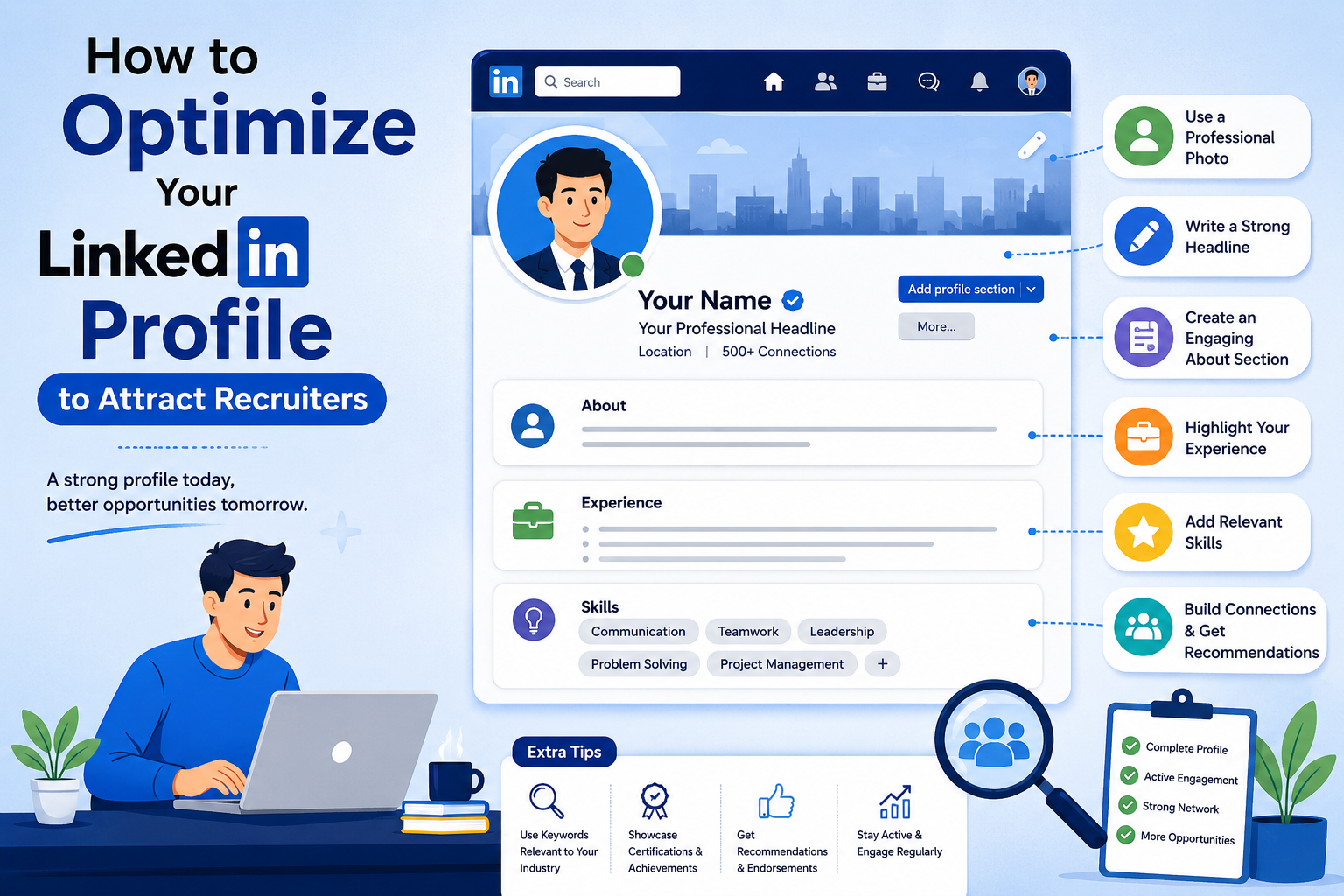
Start with a Professional Profile Picture
People connect with people, and your profile photo is one of the first things recruiters notice. A professional image helps build trust and makes your profile appear more genuine.
Choose a recent, high-quality photo with a clean background. Professional attire and a confident smile can leave a positive impression. Avoid casual photographs, group pictures, excessive filters, or images where your face is not clearly visible.
Create a Headline That Reflects Your Expertise
Your headline appears alongside your name throughout LinkedIn. Instead of using only your job title, use this space to highlight your skills and areas of expertise.
For example:
HR Executive | Talent Acquisition | Employee Engagement | Payroll Management
or
Digital Marketing Professional | SEO | Social Media Marketing | Content Strategy
A descriptive headline helps recruiters quickly understand your professional background and improves your profile’s search visibility.
Write an Authentic About Section
The About section is your opportunity to introduce yourself beyond job titles and qualifications. Rather than listing responsibilities, focus on your professional journey, strengths, and aspirations.
Share:
Keep the tone natural and professional. Think of it as a brief conversation that helps recruiters understand who you are and what value you can bring to an organization.
Keep Your Experience Section Updated
One of the biggest mistakes job seekers make is failing to update their work experience.
Each role should clearly explain:
Instead of simply describing tasks, focus on results and impact whenever possible.
For example:
Rather than writing:
“Handled recruitment activities.”
You can write:
“Managed end-to-end recruitment processes and successfully hired candidates across multiple departments while maintaining target hiring timelines.”
This approach helps recruiters understand your contribution more effectively.
Add Relevant Skills
The skills section plays a significant role in helping recruiters find your profile.
Include skills that are relevant to your profession and career goals. Examples include:
For HR Professionals
For Marketing Professionals
Choose skills that genuinely represent your expertise and align with the positions you are targeting.
Use Keywords Recruiters Search For
LinkedIn works similarly to a search engine. Recruiters use keywords to find candidates with specific qualifications and skills.
To improve your visibility:
For example, an accountant may include terms such as GST, Tally, Financial Reporting, Taxation, and Accounts Payable.
The right keywords can help your profile appear in more recruiter searches.
Highlight Certifications and Learning
Continuous learning is highly valued by employers. If you have completed professional courses, certifications, workshops, or training programs, add them to your profile.
This demonstrates your commitment to professional growth and shows recruiters that you are proactive about developing new skills.
Even short-term online certifications can add value if they are relevant to your field.
Build Trust Through Recommendations
Recommendations can strengthen your profile by providing feedback from people who have worked with you.
A recommendation from a manager, client, mentor, or colleague can help validate your skills and work ethic. When requesting recommendations, reach out to individuals who can speak genuinely to your contributions and professional strengths.s.
Expand Your Professional Network
LinkedIn is built around professional networking. The more relevant connections you have, the greater your chances of discovering opportunities.
Consider connecting with:
When sending connection requests, a short personalized note can increase acceptance rates and help start meaningful conversations.
Stay Active and Visible
Creating a profile is only the first step. Maintaining visibility requires regular activity.
You can stay active by:
Regular engagement helps increase your profile views and keeps you visible within your professional community.
Enable “Open to Work”
If you are actively searching for opportunities, LinkedIn’s “Open to Work” feature can be extremely useful.
This allows recruiters to identify your availability and understand the type of roles you are interested in. You can also specify preferred locations, job titles, and work arrangements.
Many recruiters use this filter when searching for candidates, making it easier for them to find you.
Common LinkedIn Mistakes to Avoid
Even experienced professionals sometimes overlook basic profile improvements.
Avoid these common mistakes:
Regular updates can help ensure your profile remains relevant and attractive to recruiters.
Final Thoughts
Your LinkedIn profile is often the first step in your professional introduction. A complete, well-structured profile helps recruiters understand your qualifications, skills, and career potential.
Optimizing your profile does not require major changes. Small improvements such as updating your headline, enhancing your summary, adding relevant skills, and staying active can significantly improve your visibility.
In a competitive job market, being discoverable is just as important as being qualified. A strong LinkedIn presence can help you build professional relationships, attract recruiters, and unlock new career opportunities.
Frequently Asked Questions (FAQs)
1. How important is LinkedIn for job seekers?
LinkedIn is one of the most widely used professional networking platforms and is frequently used by recruiters to identify potential candidates.
2. How often should I update my LinkedIn profile?
You should update your profile whenever you gain new experience, certifications, skills, achievements, or professional responsibilities.
3. Can freshers benefit from LinkedIn?
Yes. LinkedIn helps freshers build a professional network, showcase academic projects, and connect with recruiters and employers.
4. What should I include in my LinkedIn headline?
Your headline should include your role, expertise, and key skills rather than only your job title.
5. Does profile activity improve visibility?
Yes. Regular engagement through posts, comments, and networking can increase your profile visibility and reach.
6. Are recommendations necessary?
While not mandatory, recommendations add credibility and provide valuable social proof of your professional capabilities.
7. Should I add all my skills to LinkedIn?
Focus on skills that are relevant to your profession and align with the roles you are targeting.
8. Can recruiters contact me directly through LinkedIn?
Yes. Recruiters frequently use LinkedIn to approach suitable candidates for current and future job opportunities.


