
In today's competitive hiring landscape, terms like "recruiting" and "talent acquisition" are often used interchangeably. While both focus on bringing the right people into an organization, they are not the same.
Understanding the difference between recruiting and talent acquisition can help businesses make smarter hiring decisions and build stronger teams for long-term success.
What is Recruiting?
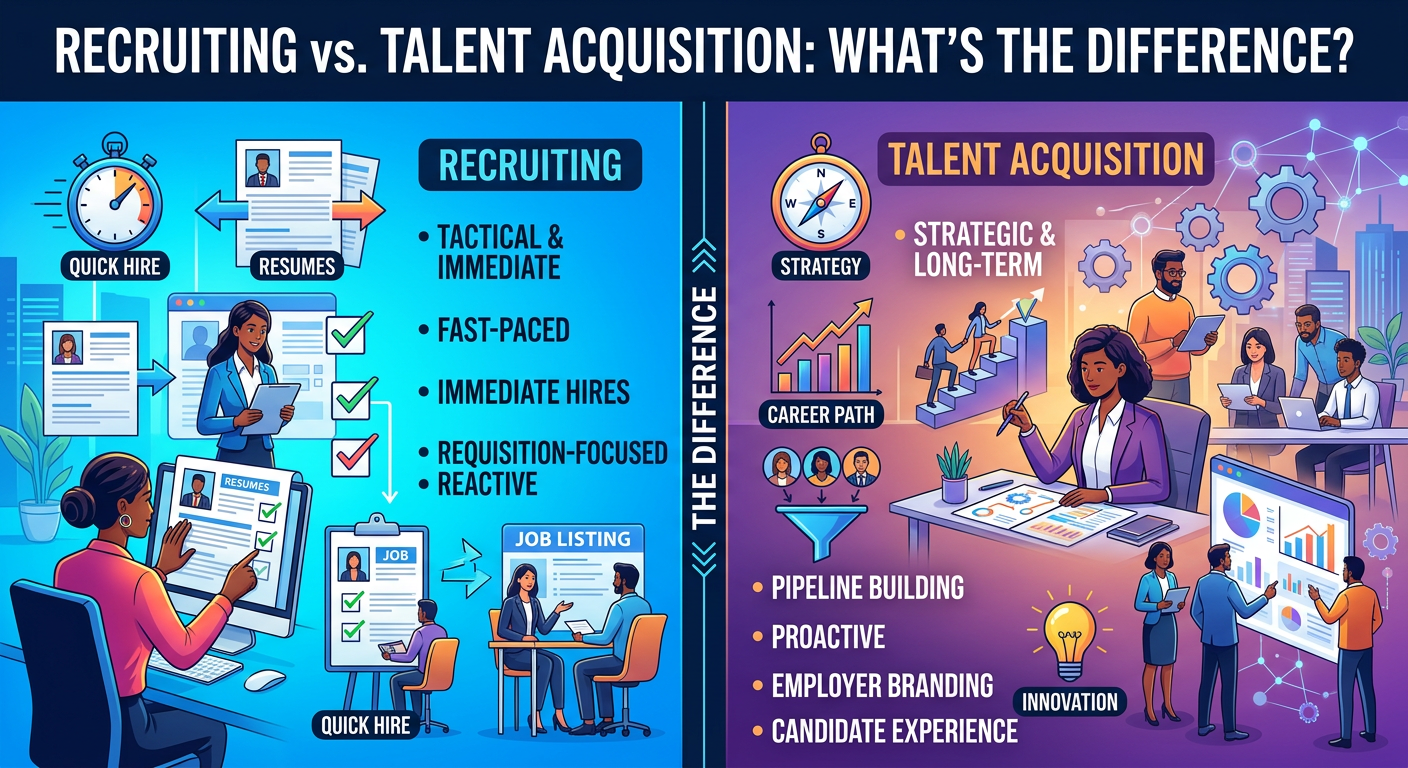
Recruiting is a focused hiring process designed to help organizations quickly find and onboard qualified candidates for current job openings. It is a short-term approach focused on finding qualified candidates as quickly as possible.
For example, if a company suddenly needs a sales executive, accountant, or customer support executive, the recruitment team will source candidates, conduct interviews, and close the position within a defined timeline.
Key Characteristics of Recruiting:
Common Recruiting Activities:
Recruiting is essential for businesses that need talent immediately to maintain operations and productivity.
What is Talent Acquisition?
Talent acquisition is a long-term strategic approach to hiring. Instead of simply filling current vacancies, it focuses on building a pipeline of skilled professionals who can contribute to the organization's future growth.
Talent acquisition involves workforce planning, employer branding, candidate relationship management, and succession planning.
Key Characteristics of Talent Acquisition:
Common Talent Acquisition Activities:
Talent acquisition is particularly important for organizations experiencing rapid growth or operating in highly competitive industries.
Which Approach is Better?
The answer depends on your business needs.
If you need to fill positions quickly, recruiting is the right solution.
If you want to build a sustainable workforce and prepare for future growth, talent acquisition is the better approach.
In reality, successful organizations use a combination of both. Recruiting helps address immediate staffing needs, while talent acquisition ensures a steady flow of quality talent for future opportunities.
Why Companies Need Both
As the demand for skilled professionals continues to grow, organizations are finding it increasingly challenging to attract and retain top talent. Relying solely on recruiting may help fill vacancies today, but it may not prepare the organization for tomorrow's challenges.
A balanced hiring strategy allows companies to
Organizations that invest in talent acquisition alongside recruitment often experience stronger employee retention and better business performance.
Final Thoughts
Recruiting and talent acquisition share a common goal—bringing great talent into an organization—but they serve different purposes.
Recruiting is about filling positions today, while talent acquisition is about preparing for tomorrow.
Organizations that understand the unique role of both recruiting and talent acquisition can build stronger hiring strategies, attract high-quality talent, and position themselves for long-term success in a competitive job market.
Whether you're hiring for an immediate vacancy or building a long-term talent pipeline, choosing the right approach can make all the difference in achieving your organizational goals.
Frequently Asked Questions (FAQs)
1. Is recruiting the same as talent acquisition?
No. Recruiting focuses on filling immediate job openings, while talent acquisition is a long-term strategy for attracting and retaining talent.
2. Which is more important: recruiting or talent acquisition?
Both are important. Recruiting helps meet current staffing needs, while talent acquisition supports future workforce planning and growth.
3. Can small businesses use talent acquisition strategies?
Yes. Even small businesses can benefit from employer branding, networking, and building a future talent pipeline.
4. What industries benefit most from talent acquisition?
Industries with ongoing hiring needs, such as IT, Healthcare, Manufacturing, Education, Renewable Energy, and FMCG, benefit significantly from talent acquisition strategies.
5. How does talent acquisition improve hiring quality?
Talent acquisition focuses on building relationships with skilled professionals and understanding future business needs, resulting in better hiring decisions and stronger employee retention.
6. What role does employer branding play in talent acquisition?
Employer branding helps organizations attract high-quality candidates by creating a positive reputation as an employer of choice.
7. When should a company focus on recruiting?
Companies should prioritize recruiting when they have immediate vacancies that need to be filled quickly to maintain business operations.


