

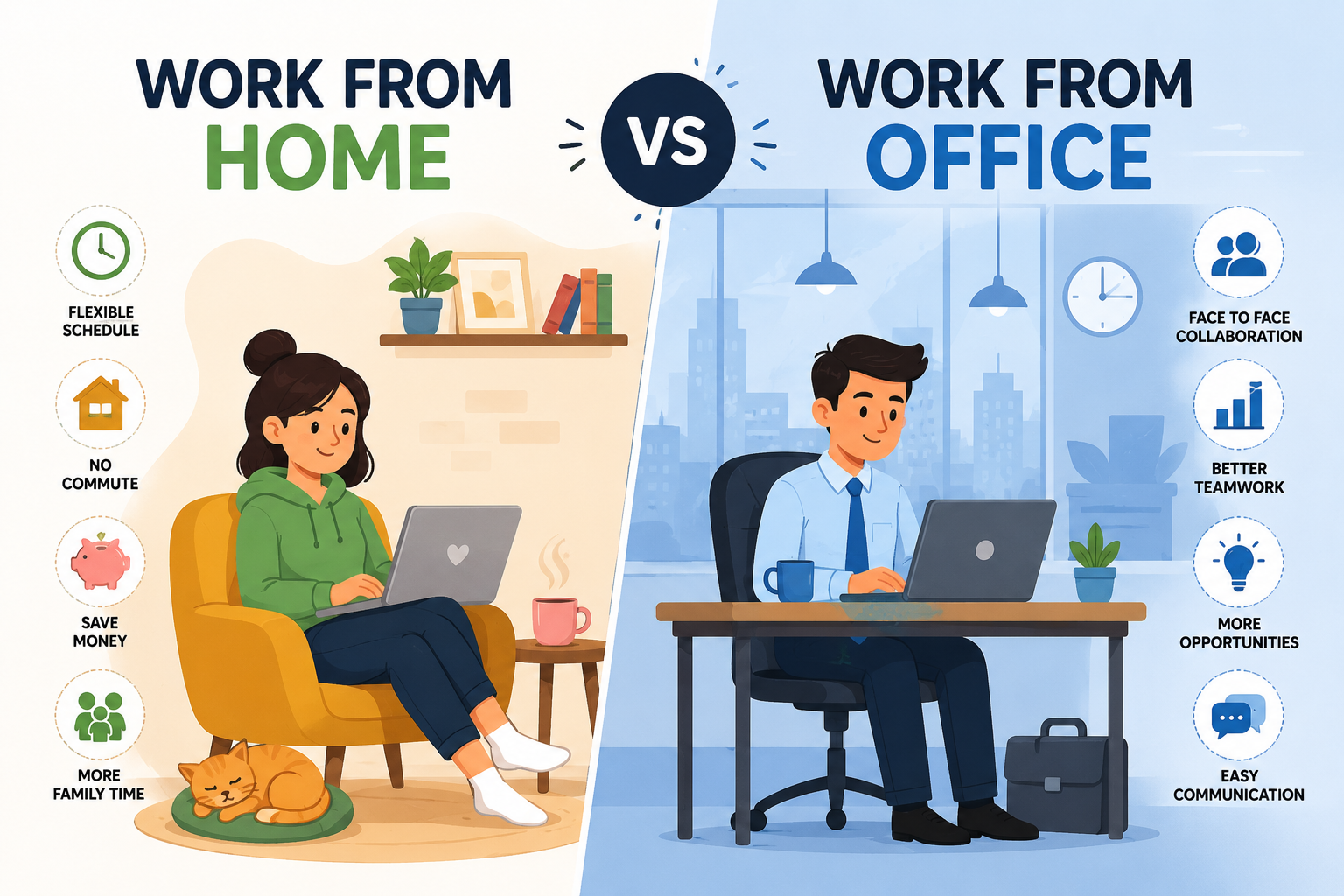
Over the past few years, work styles have changed dramatically. What began as a temporary solution is now a preferred option for millions of professionals. Work From Home (WFH) has shifted from a trend to a long-term career choice for many.
While traditional Work From Office (WFO) environments still play an important role, a growing number of professionals are actively seeking remote or hybrid opportunities. But what exactly is driving this shift?
Let's explore the reasons why more people are choosing Work From Home over Work From Office.
The Rise of Remote Work
The widespread adoption of technology has made it easier than ever for employees to collaborate, communicate, and perform their responsibilities from virtually anywhere.
From virtual meetings and cloud-based software to project management tools, businesses can now operate efficiently without requiring employees to be physically present in an office every day.
As a result, remote work has become a practical and attractive option for both employees and employers.
Better Work-Life Balance
One of the biggest reasons people prefer working from home is the ability to achieve a healthier work-life balance.
Employees can spend more time with their families, manage personal responsibilities more effectively, and create a work schedule that fits their lifestyle.
Without the daily stress of commuting, many professionals feel more energized and productive throughout the day.
A balanced lifestyle often leads to improved job satisfaction and overall well-being.
Saving Time and Commuting Costs
Daily travel to and from the office can consume several hours each week.
For professionals living in busy cities, long commutes often result in:
Working from home eliminates these challenges, letting employees use that time to learn, exercise, spend time with loved ones, or rest.
Increased Flexibility
Flexibility is one of the most attractive benefits of remote work.
Many organizations now focus more on results than fixed working hours.
This allows employees to:
For many professionals, this flexibility significantly improves both productivity and job satisfaction.
Improved Productivity for Many Employees
Contrary to common misconceptions, many employees report being more productive while working remotely.
A home environment often provides:
While productivity levels vary from person to person, many professionals find that remote work helps them focus better and complete tasks more efficiently.
Access to Opportunities Beyond Location
Remote work has opened doors to opportunities that were previously limited by geography.
Today, candidates can apply for positions in different cities, states, or even countries without relocating.
This benefits both employers and job seekers by expanding the available talent pool and increasing access to career opportunities.
Professionals can now focus on finding the right role rather than the nearest office.
Financial Benefits for Employees
Working remotely can help employees reduce several day-to-day expenses, including:
Over time, these savings can have a significant positive impact on personal finances.
Greater Independence and Autonomy
Many professionals appreciate the sense of ownership that comes with remote work.
Working from home often encourages employees to:
This autonomy can contribute to stronger professional growth and confidence.
Why Some Professionals Still Prefer Working from the Office
While remote work offers numerous advantages, working from the office remains valuable for many employees.
Some benefits of office-based work include:
The ideal work arrangement often depends on individual preferences, job responsibilities, and company culture.
The Future of Work: Hybrid Models
Many organizations are adopting hybrid work models that combine the best aspects of both remote and office work.
Employees may work from home for part of the week while visiting the office when collaboration or meetings are required.
This flexible approach is becoming increasingly popular because it provides both convenience and workplace connectivity.
Final Thoughts
The growing preference for Work From Home reflects changing employee expectations and advancements in workplace technology.
People are increasingly prioritizing flexibility, work-life balance, productivity, and personal well-being when evaluating career opportunities.
Although Work From Office continues to offer unique benefits, remote work has become a valuable option that many professionals are unwilling to give up.
As organizations continue to adapt to modern workforce needs, flexible working arrangements are likely to remain an important part of the future workplace.
Frequently Asked Questions (FAQs)
1. Why do employees prefer Work From Home?
Employees often prefer working from home because it offers greater flexibility, improved work-life balance, reduced commuting time, and lower daily expenses.
2. Is Work From Home more productive than Work From Office?
Productivity varies from person to person. Many professionals find remote work more productive due to fewer distractions and greater schedule flexibility.
3. What are the biggest benefits of remote work?
Some major benefits include flexibility, time savings, reduced commuting costs, better work-life balance, and access to broader job opportunities.
4. What challenges can employees face while working from home?
Common challenges include isolation, communication gaps, distractions at home, and difficulty separating work life from personal life.
5. What is a hybrid work model?
A hybrid work model combines remote work and office work, allowing employees to split their time between home and the workplace.
6. Which industries offer the most Work From Home opportunities?
Industries such as Information Technology, Customer Support, Digital Marketing, Content Writing, Recruitment, Finance, and Education frequently offer remote positions.
7. Do employers benefit from Work From Home arrangements?
Yes. Employers can reduce operational costs, access a larger talent pool, and often experience improved employee satisfaction and retention.
8. Is Work From Home suitable for freshers?
Yes, many organizations offer remote opportunities for freshers. However, candidates should have strong communication, time management, and self-discipline skills.
9. Will Work From Home continue in the future?
Most experts believe remote and hybrid work models will continue to play a significant role in the future of employment.


